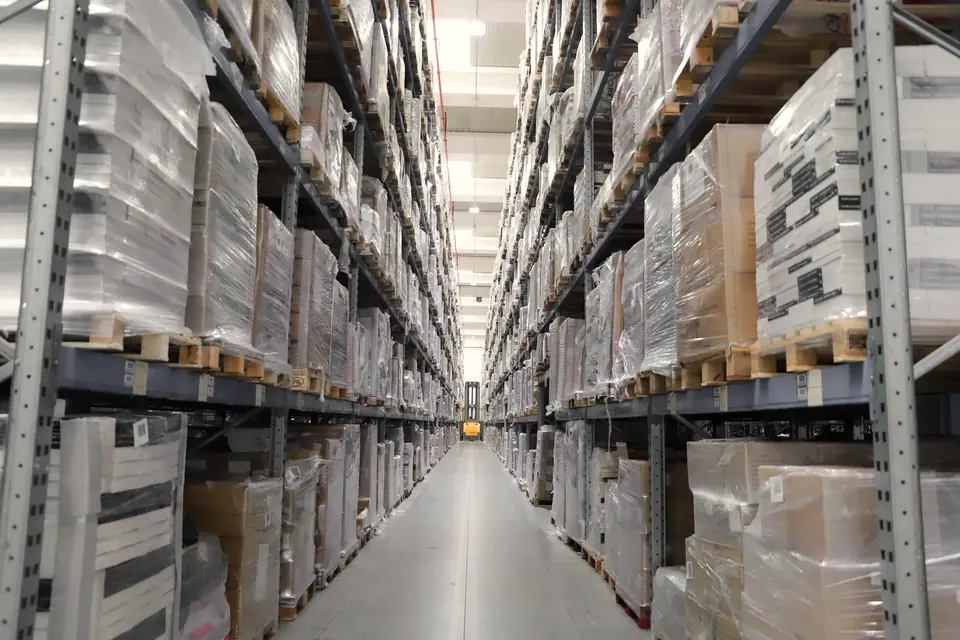
Racking aisles
Forklift lanes see the heaviest, most concentrated wear. They get the toughest build and the clearest aisle markings.
Tell us about your floor
A few details are enough to start. We'll follow up to talk through the slab, the system options and a time to see the space.
Warehouses ask a floor to do a few things very well for a very long time: stop dusting, handle forklift wheels, keep aisles and safety zones clearly marked, and be installed without bringing shipping to a halt.
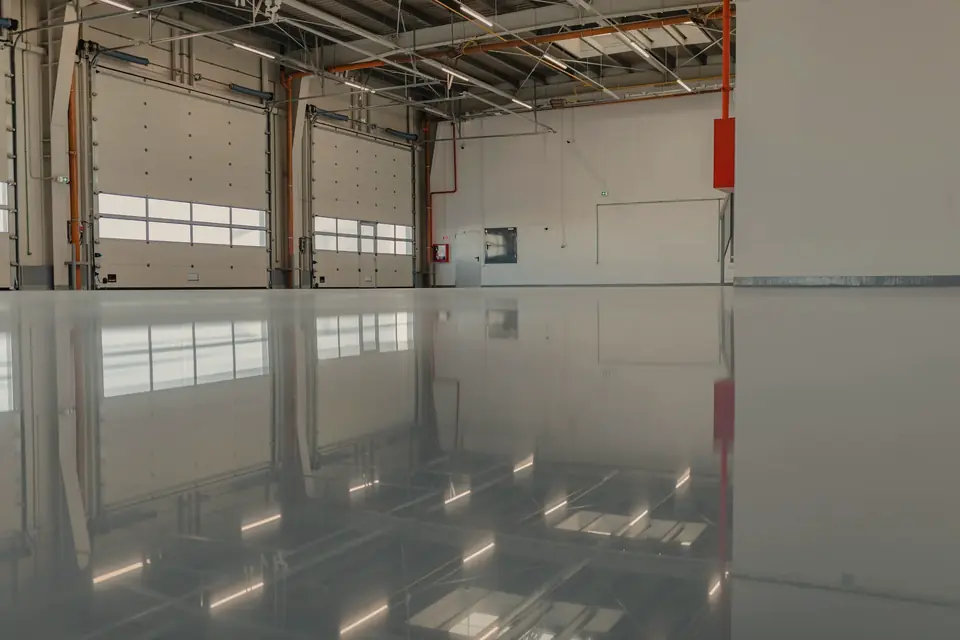
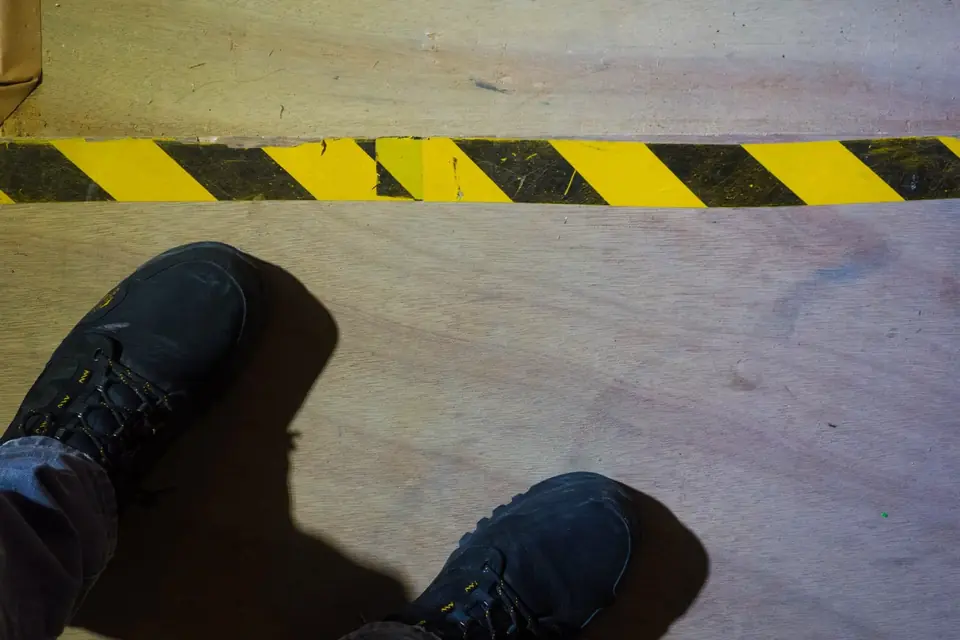
A bare warehouse slab works for a while. Then the surface starts dusting, settling on inventory and getting into equipment. Forklift traffic polishes some lanes and grinds others. Joint edges chip and every pass over them jolts the load. Painted aisle lines fade within months. None of this stops operations outright, but together it adds cost and friction every day.
Coating a warehouse is about solving those problems in the right order, starting with the ones that cost the most in damaged equipment and lost time. Joints are repaired first because they cause the most damage. The surface is sealed or coated to stop dusting and make sweeping effective. Then aisles, pedestrian walkways, staging areas and hazard zones are laid into the floor with coatings that wear at the same pace as everything else.
Large distribution centers in the Valley are frequently unconditioned or only partly cooled. That affects product selection and when we work, especially between May and September.
A rendered aisle between pallet racks, shown on a stained bare slab and then with a gray coating and yellow aisle striping. The camera and racking are identical on both sides.
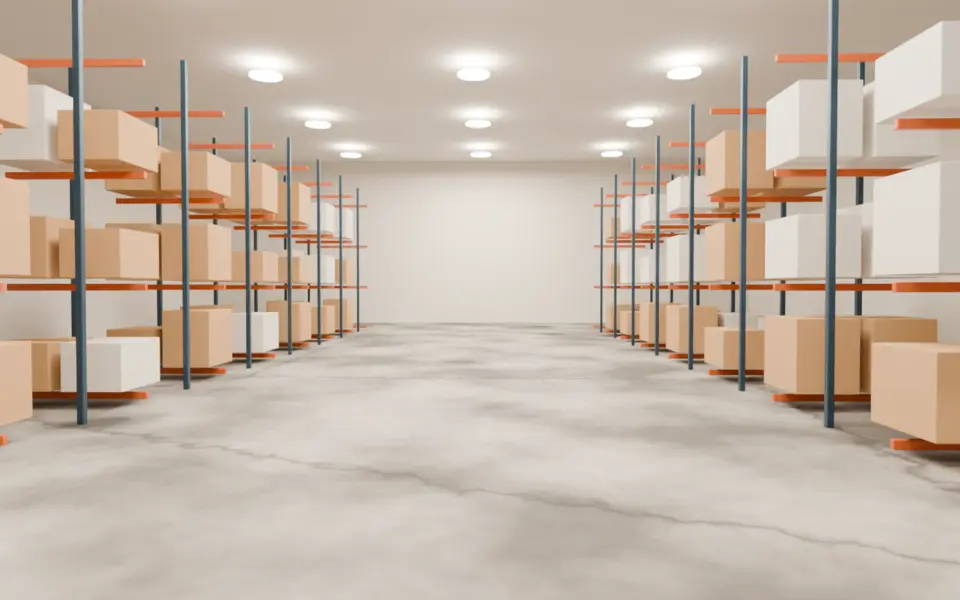
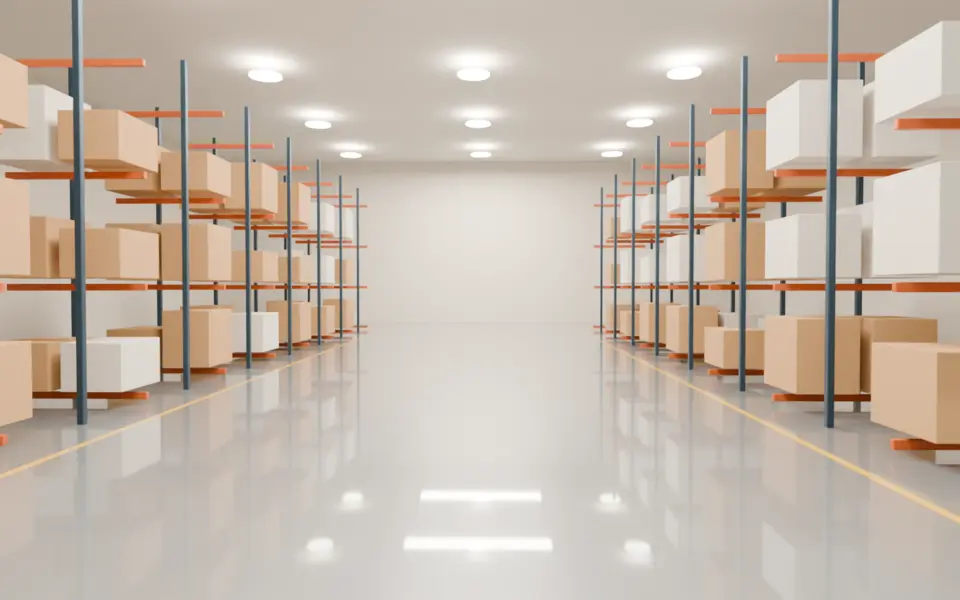
Comparison images are representative examples (licensed stock photography and rendered illustrations) and are not presented as completed projects of ours.
Not every warehouse needs a full coating. These are the three main routes and when each makes sense.
| Approach | What it involves | Best when | Limitations |
|---|---|---|---|
| Densify and seal | Chemical hardener and sealer worked into the existing slab | The slab is sound and the main issue is dusting | Does not hide stains or add color; markings are separate |
| Grind and polish | Progressive diamond grinding and densifying to a sheen | You want reflectivity and low maintenance on a good slab | Damaged or patched slabs show every flaw |
| Resinous coating | Primer and epoxy or urethane system, often with striping | You need color, chemical resistance, a uniform look or to hide a worn slab | Needs recoating in high-wear lanes over time |
We usually treat a warehouse as several floors in one building, each built for what happens there.
Forklift lanes see the heaviest, most concentrated wear. They get the toughest build and the clearest aisle markings.
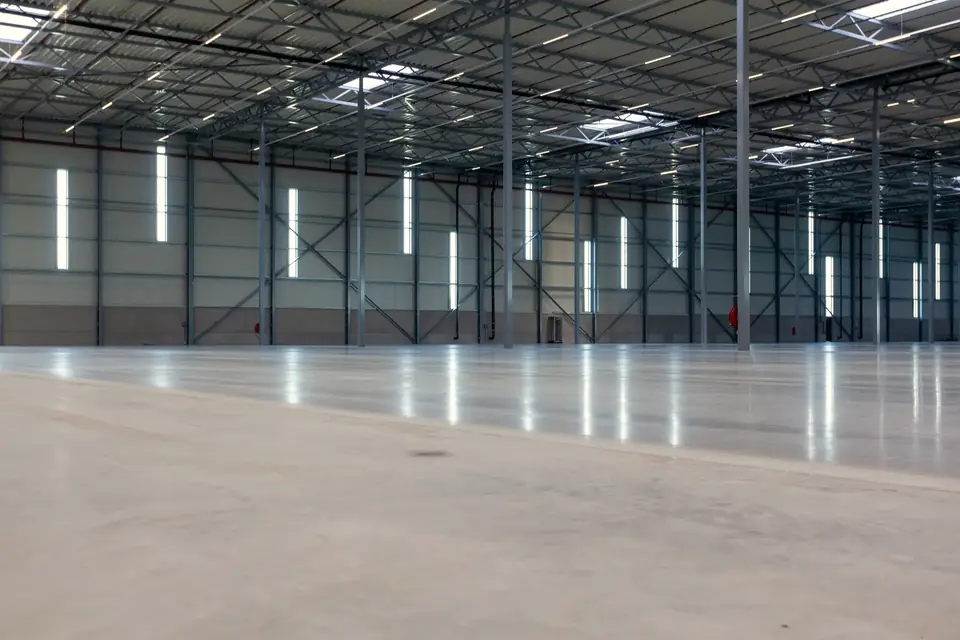
Dock areas see sun, heat, dust and truck tracking through the doors. Texture and abrasion resistance matter most here.
Pedestrian paths, crosswalks, hazard areas and equipment parking are marked in contrasting colors within the coating.
Floor markings are part of how a warehouse runs. We build them into the coating instead of adding them as an afterthought.
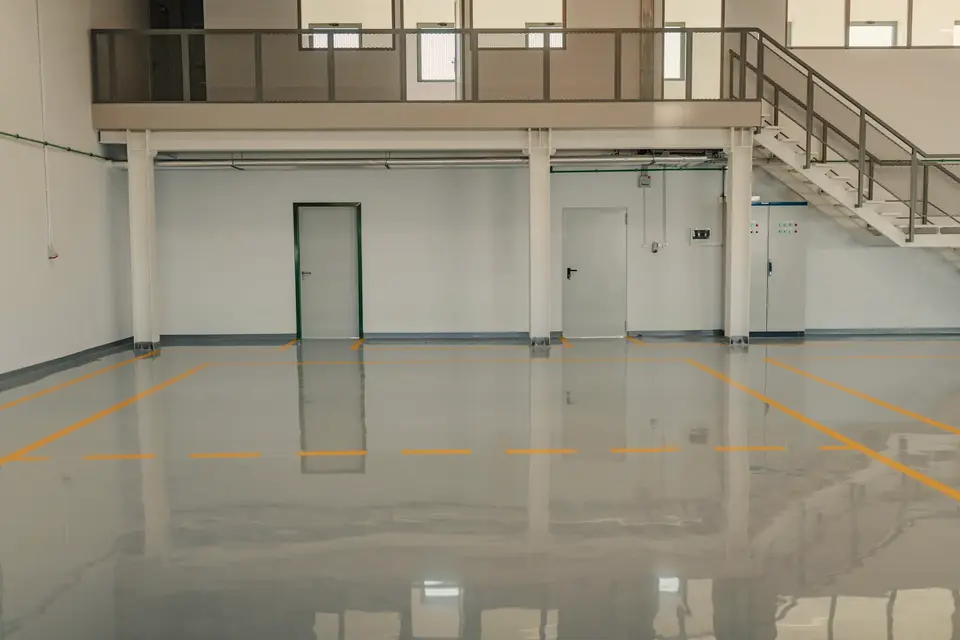
Solid lines define forklift lanes and rack faces. Width and color follow the conventions your safety team uses.
Separate, clearly marked paths for people on foot, with crosswalks where they meet traffic.
Diagonal striping in front of electrical panels, fire equipment and doors.
Numbered bays, staging squares and corner marks that help pickers and drivers.
Markings coated into the system last far longer than paint or tape, and can be refreshed in place.
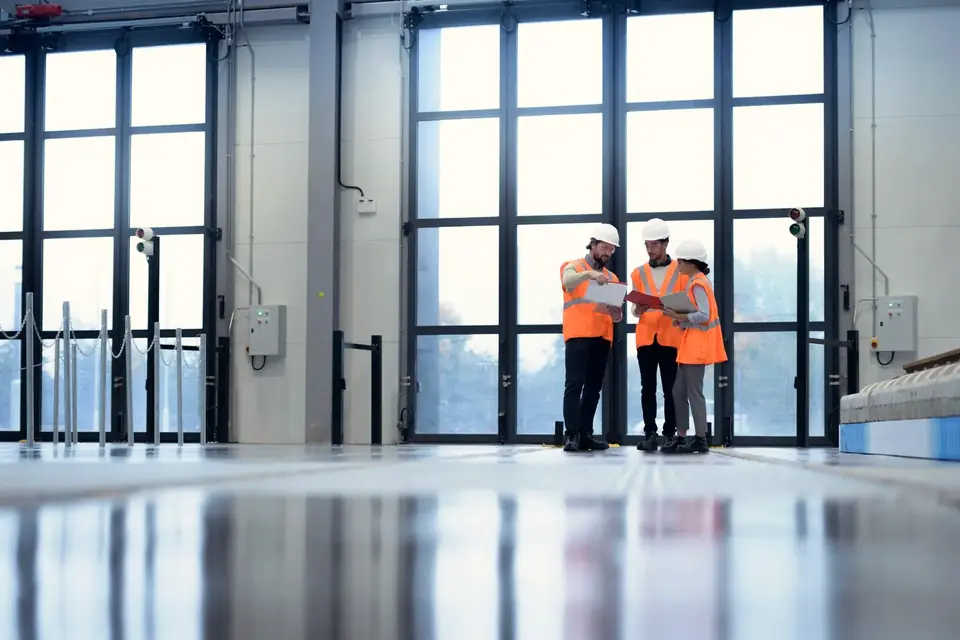
Few warehouses can empty completely. We plan coating projects in zones that match how your building is used: an aisle at a time, a section of racking, or one half of the floor over a weekend. Inventory moves are planned with your team so nothing is stranded.
Under existing racking, there are options. Some owners coat only the aisles and leave the rack footprint as sealed concrete; others coat under racking during a planned reconfiguration. We will discuss what is practical for your layout.
Fast-curing products can return zones to service quickly. Where a slower, tougher system is the better choice for forklift lanes, the phasing plan accounts for the longer cure.
Map traffic patterns, problem joints, dusting areas and shutdown windows.
Densify, polish or coat for each area, with a striping layout to review.
Spalled joints rebuilt and damaged areas repaired before any coating.
Grinding or shot blasting to the profile the chosen system needs.
System installed zone by zone, with markings laid in as part of the process.
Clear times for foot traffic, pallet jacks and forklifts in each zone.
Large warehouses in the Valley are often only partly cooled, if at all. In summer, the air under the roof deck and the slab itself can stay warm long after sunset. That affects coatings in two ways. During installation, high temperatures shorten working time and can push some products outside their application range. After installation, slabs near dock doors see repeated heating from sun and truck traffic, which favors coatings that tolerate heat and some movement.
Dock areas also take in the most dust. Fine desert grit carried in on pallets and tires is abrasive under forklift wheels. Abrasion-resistant topcoats and regular sweeping or scrubbing in those zones extend the life of the floor considerably.
Distribution buildings along the I-10 and Loop 303 corridors and older industrial parks closer to the city each have their own slab conditions. Newer tilt-up buildings often have flat, hard slabs with sealed or cured surfaces that must be removed. Older buildings tend to have more joint damage, patches and contamination. Both are workable when the preparation is matched to the slab.
Coating a whole building at once is not the only option. Many owners start with the areas causing the most trouble, such as damaged joints in main forklift lanes or dusting near pick areas, and coat the rest of the floor in later phases. We can price the project in phases so the work lines up with budgets and shutdown windows.
A properly selected and prepared system will. Forklift lanes typically get a thicker build and a hard topcoat, and joint edges are repaired so wheels do not chip them. Lanes may need a refresh coat over time, which is far less disruptive than a full replacement.
Yes, with planning. We schedule for the coolest hours, choose products rated for higher temperatures, and monitor slab temperature closely. In peak summer some projects are best done overnight.
We can. Lines applied in a durable two-part coating over a properly prepared surface last much longer than single-part paint, even on an otherwise uncoated slab.
Damaged edges are cut back and rebuilt, then the joint is filled with a semi-rigid filler that supports wheels while allowing the slab to move.
Light-colored coated floors reflect more of the overhead lighting back into the space than bare, dusty concrete, which many facility managers notice right away in aisles between tall racking.
It is possible but disruptive, because racking and inventory must be moved. Many facilities coat aisles and open floor first and address rack footprints during a planned reconfiguration. We will recommend the most practical approach for your layout.
Your operations or safety team sets the layout based on racking, equipment widths and traffic flow. We help translate that plan onto the floor, chalking lines for review before anything is coated, and can suggest durable color conventions for lanes, walkways and hazard zones.
If the slab is in good condition, grinding and polishing with a densifier can produce a durable, reflective floor with low maintenance. Slabs with heavy damage, patches or contamination usually look and perform better with a coating.
It depends on the system. Fast-cure products can return a zone to foot traffic within hours and to forklifts after about a day or two. Thicker epoxy systems in heavy lanes may need longer. Each zone's return time is set out in the phasing plan.
Heavy-duty systems for manufacturing, fleet maintenance, hangars and plants.
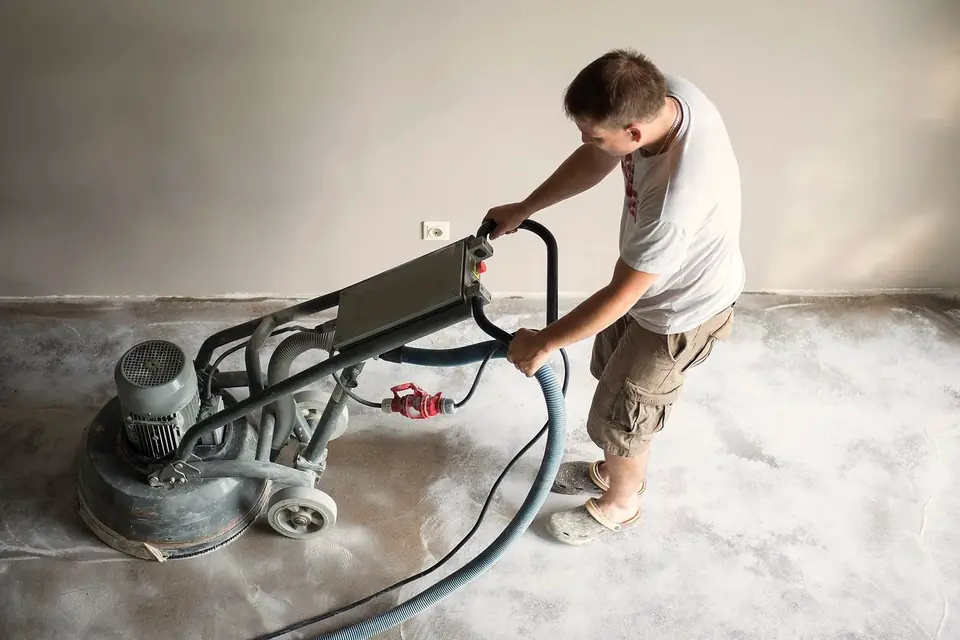
Diamond grinding, coating removal, crack and joint repair, moisture testing.

Retail, office, salon and showroom floors scheduled around business hours.
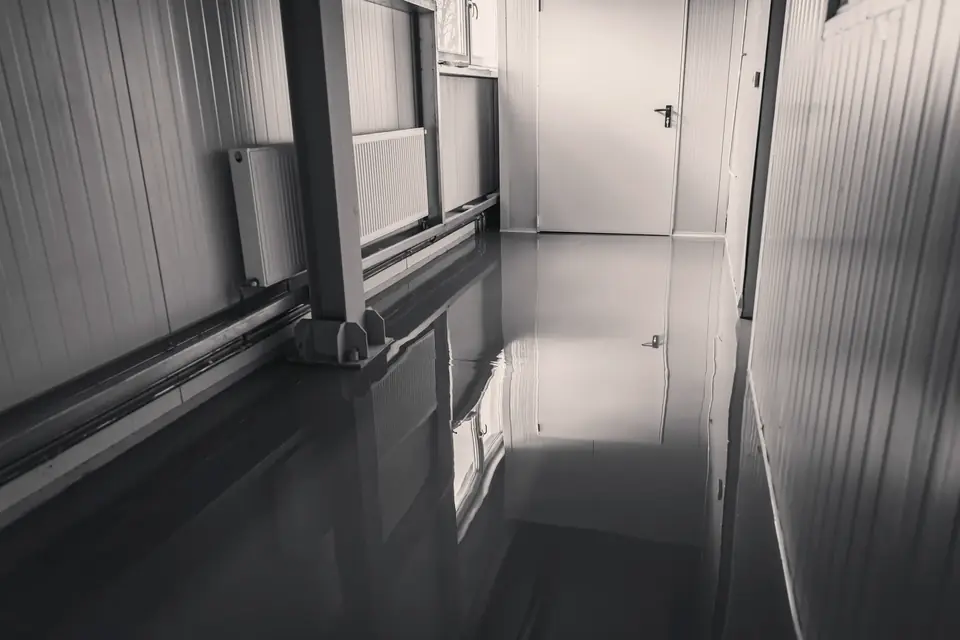
Sealers, clear coats, solid colors and quartz systems for everyday concrete.
Share the size of the building, what your forklifts do and when you can spare floor space. We will walk the facility with your team and propose a phased plan.
Prefer to talk? Call (XXX) XXX-XXXX